
SPARC Evolution’s Mission & Vision
SPARC Evolution was founded on a clear observation: first-generation battery recycling struggled not because the market was missing, but because the process architecture was too complex, capital-intensive, and scale-dependent. SPARC™ was built to get the economics right from the start by redesigning critical materials refining around direct battery-grade outputs.

Our Mission
Produce the critical materials the clean energy economy needs from the waste streams it already generates, at economics that work without requiring massive scale to justify.

Our Vision
A domestic critical materials refining industry that is profitable by design, built on process thinking that makes smaller-scale, local production economically viable.
Leadership & Advisors
Founder-led, science-driven, and supported by advisors with direct experience in critical materials refining, industrial scale-up, automotive supply chains, infrastructure finance, and commercial market access.
SPARC Evolution is led by a founder with nearly two decades of hands-on hydrometallurgical process development, piloting, and commercial scale-up, supported by an advisory board with direct experience across automotive OEMs, battery supply chains, and infrastructure finance. The company has completed pilot validation, filed PCT patent applications, and is advancing customer qualification.


Dr. Ghazaleh Nazari
Founder & CEO
Dr. Ghazaleh Nazari is a critical materials executive, entrepreneur, and hydrometallurgist with over 18 years of experience spanning technology commercialization, industrial scale-up, business strategy, and global operations. She is the Founder and CEO of SPARC Evolution, where she developed and validated the company’s proprietary refining process for producing battery-grade materials from lithium-ion battery waste. She leads commercialization, strategic partnerships, and capital raising.
Prior to founding SPARC, Ghazaleh served on Coherent’s Senior Leadership Team, where she led critical materials technology strategy and the development of new product lines from concept through market deployment. Her role combined technology development with business case development and capital planning, strategic partnerships, and P&L, budgeting, and operating responsibilities. Earlier at Hatch, she led hydrometallurgical work for major global mining and metals companies across the full project lifecycle, building deep experience in engineering and plant design, project economics, scale-up, commissioning, and operations. She has taken technologies from laboratory development through industrial deployment across North America, South America, Europe, and Asia.
Ghazaleh holds a Bachelor’s and Ph.D. in Materials Engineering, with a minor in Business and Engineering Management, from the University of British Columbia. She is a licensed Professional Engineer, an inventor on multiple patents, and the author of numerous technical publications focused on sustainable metals recovery and purification. Her leadership integrates scientific depth, commercial judgment, and operational execution in bringing critical-materials technologies to market.


Renata Arsenault
Battery Supply Chain
Renata Arsenault is a recognized global expert in advanced battery recycling and sustainability, with more than two decades of leadership at Ford Motor Company. Since 2006, she has been at the forefront of Ford’s battery initiatives, developing recycling strategies, advancing supply chain circularity, and building collaborations with suppliers, recyclers, and research institutions to accelerate sustainable solutions for the EV and energy storage industries.
She plays a leading role across the industry as NAATBatt Chair Emeritus, Board Member, and Co-Chair of the Recycling Committee. She also serves as a program lead for the United States Advanced Battery Consortium (USABC), where she manages collaborative R&D initiatives spanning second life, lifecycle analysis, and closed-loop recycling pathways. Renata has been widely recognized for her ability to bridge technical innovation with industry adoption.
Renata holds a B.Sc. in Chemical Engineering from Queen’s University and began her career in process development and scale-up of specialty chemicals before transitioning into the battery sector. She brings deep industry ties across the global battery supply chain and continues to be a driving force in shaping sustainable materials strategies for the automotive industry.
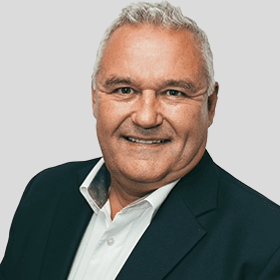
Robert van Beers
Scale-Up & Commercialization
Robert van Beers is a senior executive and chartered corporate director with over 30 years of experience in the financing, development, and execution of power and infrastructure investments around the world. He most recently served as Chair of e-Zinc, a Toronto-based long-duration energy storage company which he helped found.
Previously, Robert was founder and CEO of Tonbridge Power, leading an independent power transmission company to build the world’s first truly merchant international power line. He has held senior leadership and advisory roles across the energy and infrastructure sectors in North America and internationally, including at Enbridge, PwC, CRAI and Hatch. Over his career, he has served on more than a dozen boards and led complex projects in more than twenty countries, including serving as Project Lead on the competitively tendered $777 million East-West Tie transmission project.
Robert holds a master’s degree from Queen’s University as well as advanced program certificates from Chicago Booth School of Business, INSEAD and the Rotman School of Business. Today he advises energy-related companies on corporate and financial strategy.
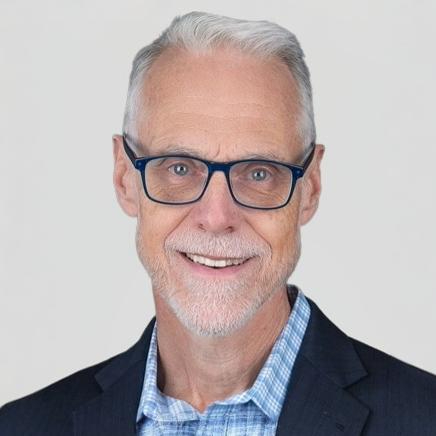
Peter McArthur
Financing & Strategic Growth
Peter McArthur is a seasoned advisor in industrial and climate technology with decades of experience supporting the growth and commercialization of cleantech companies across Canada. He is currently a Senior Advisor at Fort Capital , where he works with founders and leadership teams operating in industrial and climate-tech sectors.
Previously, Peter spent more than a decade at Royal Bank of Canada, joining in 2013 and serving as Vice President and National Cleantech Lead at RBCx until retiring in June 2024. In that role, he supported cleantech companies from early-stage commercialization through public markets, working closely with management teams across capital access, growth planning, and strategy. His experience spans a broad range of companies and investors across Canada’s cleantech ecosystem.
Beyond his advisory and capital markets work, Peter has played a long-standing leadership role in Canada’s cleantech community. He is the Founding Chair of the Ontario Clean Technology Industry Association (OCTIA) and serves as Chair of the Canada Cleantech Alliance, a national network of cleantech associations, research organizations, and incubators. His work reflects a sustained commitment to advancing Canada’s industrial innovation and climate technology sectors.
Our Breakthrough
SPARC™ was built to solve what conventional refining design gets wrong. Conventional refining relies on full metal separation, solvent extraction, and multi-step crystallization, producing flowsheets that are too capital-intensive and complex to deploy at the speed the clean energy transition requires. SPARC™ changes that with a streamlined process designed to produce battery-grade pCAM and lithium hydroxide directly from battery waste, without the costly intermediate refining steps that limit scalability.
Why It Matters
Our work goes beyond recovery. It enables circularity at scale. By designing a process that is simple, efficient, and industrially viable, SPARC™ is building the foundation for a cleaner, more resilient supply chain.
Circular by design: Battery-grade pCAM and lithium hydroxide are designed to feed directly into cathode and battery manufacturing.
Scalable and deployable: Compact plants with smaller footprints accelerate adoption worldwide.
Global impact: Reducing waste and emissions while securing critical materials for electrification.
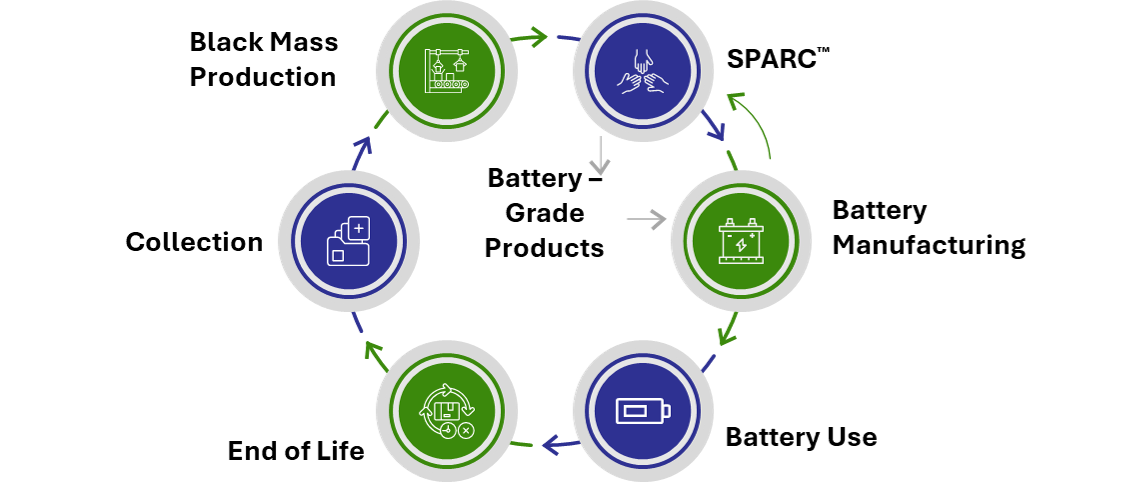
SPARC™ closes the loop by transforming NMC and LFP battery waste into battery-grade materials for the clean energy supply chain.
Join Us in Building the Future
SPARC Evolution is advancing customer qualification and engaging investors and strategic partners aligned with critical materials, domestic supply chains, and clean technology scale-up. If you’re aligned with this space, let’s connect.